
Slab Foundation Repair
Stabilize and Level a Concrete Slab That Has Moved
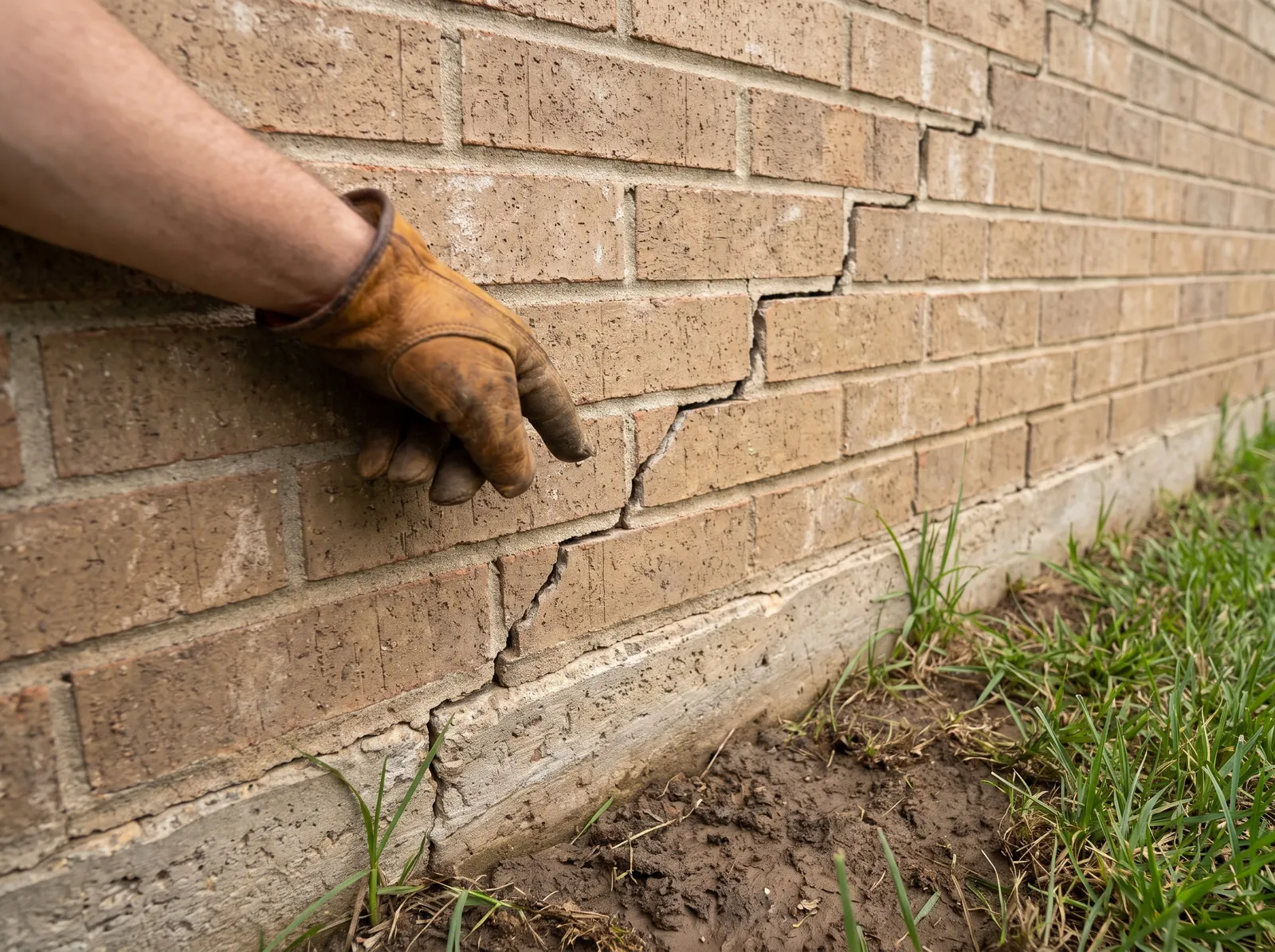
Seeing floor cracks, sloping rooms or brick separating at the corners? Call us and request a free estimate.
- Slab and pier and beam homes
- Written estimate before work
- Floor elevation survey on every visit
Get your free estimate
Tell us what's going on. We call you back fast.
How Slabs Move on Rowlett Clay
A concrete slab rests directly on the soil beneath it. In Rowlett that soil is Blackland Prairie clay, among the most expansive in Texas. It swells after spring storms, then shrinks and cracks during hot, dry summers, and the slab rides along with every change.
Edges usually move first because they dry out and soak up water faster than the middle of the house. A corner can settle while the center heaves, or a section near a large tree can drop as roots pull moisture out. Both conventional and post-tensioned slabs, the two common types in Rowlett, can show these patterns.
Slab repair aims to stop the downward movement and bring the slab back toward level where it is practical. That usually means supporting it on piles or piers that reach firmer soil, combined with drainage changes and a plumbing check so the same forces do not keep working on the house.
Slab Repair Methods We Use
The right method depends on the soil, the slab type and how far the house has moved. Many slab jobs combine more than one of the approaches below.
Pressed concrete piles
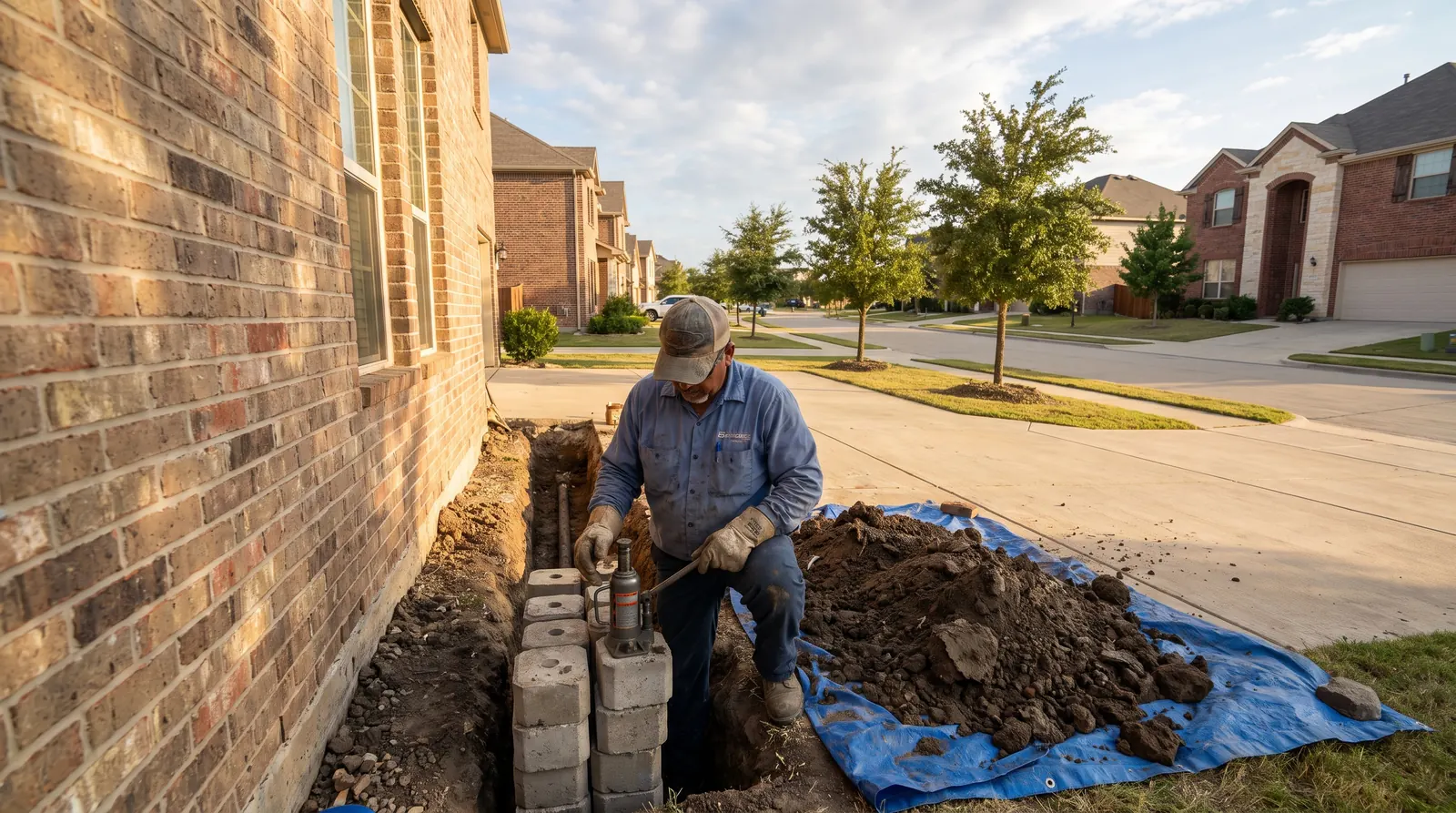
Precast concrete cylinders are stacked and hydraulically pressed into the ground beneath the slab until they hit strong resistance. A cap and shims transfer the load. This is a common, cost-effective method for slab homes on clay.
Steel piers
Steel piers are driven deeper, often to bedrock or very dense soil. They suit houses where firm bearing is far down or where loads are heavy, and they tend to cost more per pier than pressed concrete.
Slab lifting and leveling
Once piers are set, jacks lift the slab in small increments while we watch an elevation survey. The goal is to get close to level without forcing the slab so far that it cracks finished surfaces.
Polyurethane or mudjacking for flatwork
Sunken driveways, patios and walks can often be raised by injecting foam or a grout slurry beneath them. This is used for flatwork and minor voids, not as a substitute for piers under a house.
Plumbing leak checks
A leaking sewer or supply line under a slab can soften or wash out the soil. Where the symptoms fit, we recommend a plumber's pressure or camera test before or after leveling, because a hidden leak can undo the repair.
Pricing
Slab Foundation Repair Cost Ranges
| Repair type | Typical range | What moves the price |
|---|---|---|
| Pressed concrete pile or steel pier, per pier | $1,000 – $3,000 | Pier type, depth to firm soil, interior or exterior placement |
| Whole-house slab stabilization | $4,000 – $15,000+ | Number of piers, slab size, how far it moved |
| Flatwork leveling (mudjacking or foam) | $500 – $2,500 | Area to lift, void size, material used |
| Slab crack sealing or injection | $250 – $800 per crack | Crack length, width, floor covering to remove |
| Engineer's foundation report | $400 – $1,000 | Scope of the visit and report, paid to the engineer |
These ranges are national planning figures, not quotes. Pier count, interior access through flooring and plumbing findings make the biggest difference. You get a written estimate before any work begins.
How it works
Steps in a Slab Foundation Repair
- 1
Call and describe the signs
Share where floors crack, which doors stick and where brick has separated. Photos help us plan the visit.
- 2
Survey and inspect
We take floor elevations, look at the slab edge, drainage and trees, and note any signs of a plumbing leak.
- 3
Recommend a pier plan
We show the proposed pier layout and method, and suggest a plumbing test or engineer's report where it makes sense.
- 4
Approve the written estimate
Pier count, method, access and price are all in writing. Work starts after you approve.
- 5
Install piers, lift and backfill
Piers are installed, the slab is raised in stages, then holes are backfilled and a final elevation reading is shared with you.
Why Choose Us for Slab Foundation Repair?
Elevation survey first
We measure the floor across the house so recommendations are based on numbers, not guesses about which way it sank.
Only the piers you need
Pier count drives the cost. We place them where the slab has moved and explain the layout so you can see why each one is there.
Plumbing and drainage included in the plan
Leveling a slab while a leak or bad drainage keeps working on it is a poor use of money. We address the cause along with the lift.
Engineer coordination
If you want an independent engineering letter, or the job needs one, we work from your engineer's findings and supply what they need.
Questions
Slab Foundation Repair FAQ
Pressed concrete piles or steel piers: which is better?
Both work when installed correctly. Pressed concrete is common and economical on clay. Steel piers reach deeper soil and suit some heavier or more difficult sites. We recommend based on the house and soil, not a single favorite method.
Can my slab be made perfectly level?
Not always. Slabs are rarely perfectly flat even when new, and forcing an old slab too far can crack tile or drywall. The aim is to stabilize it and bring it back as close to level as is safe.
Why test the plumbing?
A slow leak under the slab can soften clay and cause settling in one area. Finding it means the cause gets fixed along with the symptoms, and leveling can sometimes shift old pipes, so a test afterward is also worthwhile.
Do you need to work inside the house?
Many piers go in along the outside edge. If the slab has dropped in the middle, some interior piers may be needed, which means lifting flooring in those spots. We tell you that before you approve the estimate.
Slab Foundation Repair Across Texas
We handle slab foundation repair in these communities:
Need Slab Foundation Repair in Rowlett?
Cracks in the slab or floors that slope? Call (469) 890-1640 and request a free estimate.