
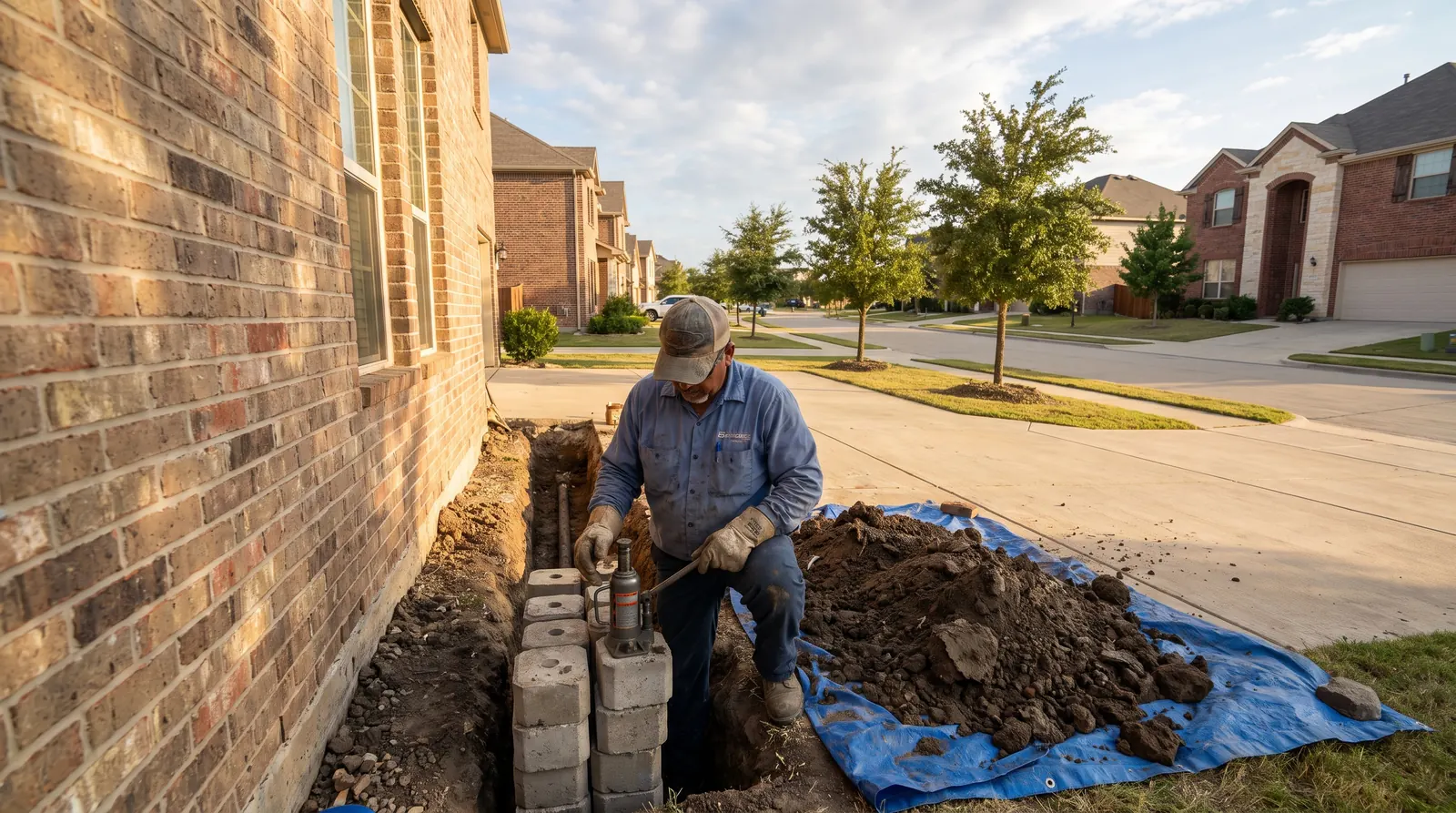
Foundation Repair in Rowlett, Texas
Foundation Repair and Leveling for Rowlett Homes
Seeing stair-step cracks in the brick, a gap above a door or a floor that slopes toward one corner? Tell us what is happening and request a free foundation estimate.
- Slab and pier and beam homes
- Written estimate before work
- Floor elevation survey on every visit
Get your free estimate
Tell us what's going on. We call you back fast.
Foundation Repair in Rowlett, TX
Why Foundations Move in Rowlett
Rowlett sits on the Blackland Prairie, and the dark clay under most yards here is among the most expansive soil in Texas. It swells when it gets wet and shrinks hard when it dries out. In a long, dry summer you can see the result in the lawn: cracks wide enough to slip a hand into. The same movement is happening under your house, and the slab rides along with it.
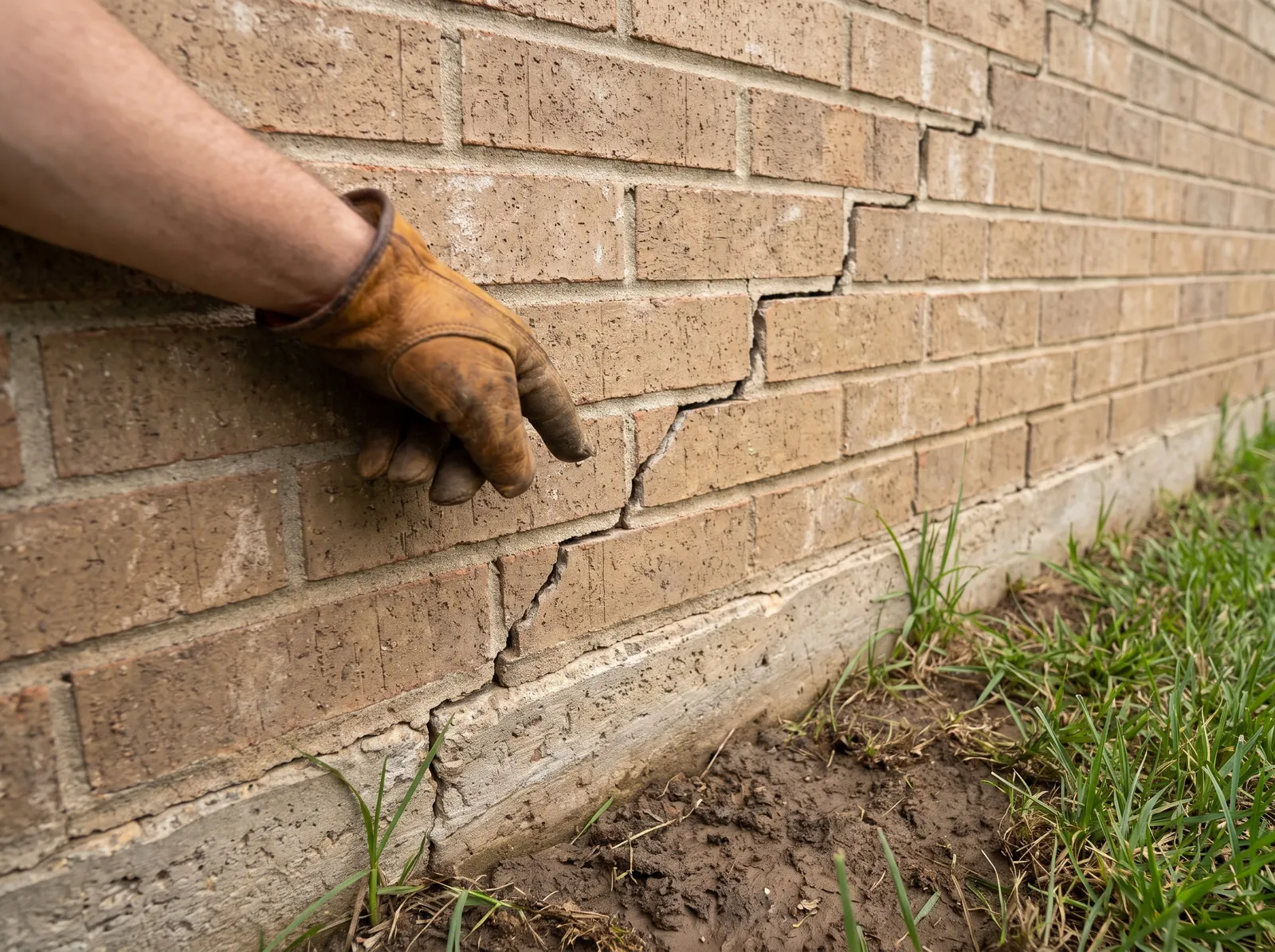
Most homes in town are brick veneer houses on concrete slabs built from the 1980s through the 2000s. When one side of a slab drops or heaves, the brick shows it first with stair-step cracks along the mortar joints. Inside, drywall cracks open at the corners of doors and windows, doors start to drag or stop latching, and tile floors crack in a line. Foundation Repair Rowlett helps homeowners figure out which of those signs matter and what should be done about them.
Some movement is seasonal and small. Some is ongoing settlement that needs support under the slab. The difference comes down to measurements, not guesses, so every visit starts with a look at the whole house and a floor elevation survey.
What we do
Our Foundation Repair Services
Foundation repair is all we do. That includes slab repair and leveling, pier and beam repair, crawl space repair, structural repair of walls and framing, and the drainage and waterproofing work that keeps clay soil from moving again. Each job starts with finding out why the foundation moved, because the right repair depends on it.
Foundation Repair
Foundation repair in Rowlett for slab homes on Blackland Prairie clay: pressed pilings, steel piers, slab leveling and moisture control.
Learn moreFoundation Drainage and Waterproofing
Control the water and soil moisture around a slab home so the clay underneath stops swelling and shrinking unevenly.
Learn moreCrawl Space Repair
Dry out a damp crawl space, stop wood rot and firm up soft, sagging floor framing under older pier-and-beam homes.
Learn moreStructural Repair
Repair the framing, beams and brick that show damage when a house has moved: sagging floors, cracked veneer and doors that stick.
Learn moreSlab Foundation Repair
Stabilize and level a concrete slab with pressed piles or steel piers, and check for plumbing leaks that may be moving it.
Learn morePier and Beam Repair
Re-shim, replace failed piers, add new beams and re-level a pier-and-beam house that has dipped or developed soft spots.
Learn moreWhy homeowners call us
Why Choose Foundation Repair Rowlett?
We measure before we recommend
A floor elevation survey shows where the slab is high, where it is low and how far it has moved. That turns a vague worry into a clear picture you can make decisions with.
Repairs sized to the problem
If one corner has settled, we do not sell a full perimeter of piers. If the house needs more support than that, we explain why with the measurements in front of you.
We look at the water, not just the crack
Gutters, grading, beds and sprinklers all affect how Blackland clay behaves. We point out what is feeding the movement and how to correct it.
A written scope before work starts
You get the repair method, the number and location of piers or supports, and the price in writing first. If we find something unexpected during the work, we stop and talk to you.
Respect for your home and yard
Foundation work means digging next to your house and sometimes inside it. We plan access, protect landscaping where we can, backfill neatly and clean up when we leave.
Fast call-backs and straight answers
Call and describe what you are seeing. We get back to you quickly and tell you honestly whether it looks like something to watch or something to repair.
How it works
Our Slab Repair Process
- 1
Call and describe the signs
Tell us about the cracks, doors or floors you have noticed. Photos help us plan the visit.
- 2
Elevation survey
We measure floor levels room by room and look at the perimeter, drainage, trees and any signs of a plumbing leak.
- 3
Pier layout and estimate
You get a written plan showing where support goes, the price and whether an engineer should review it.
- 4
Install and lift
We install the piers or pilings, lift the slab in stages and watch for stress on walls, doors and plumbing.
- 5
Re-measure and clean up
We take final readings, backfill and tidy the work areas, and explain how to keep soil moisture steady going forward.
Our approach
A Practical Approach to Foundation Problems
Not every crack means your house needs piers. Hairline shrinkage cracks in a slab are normal, and some brick cracks open in August and close again by spring. Other times a corner of the house has dropped enough to need lifting and permanent support. We measure, explain what the numbers show and recommend the smallest repair that addresses the real cause.
Water is usually part of that cause. Downspouts that dump next to the slab, flower beds that slope toward the house and uneven watering during drought cycles all push the clay to swell in one spot and shrink in another. When drainage is part of the problem, we say so and include it in the plan, because lifting a slab without fixing the water around it rarely holds.
When a home needs a structural engineer's evaluation, such as before a sale or for a large repair, we can work with your residential civil or structural engineer or recommend that one gets involved. You get the scope, the method and the price in writing before work starts.
Service area
Where We Serve You
We are based in Rowlett and work across Dallas and Rockwall counties on both sides of Lake Ray Hubbard. That includes Rockwall and Heath on the east shore, Garland and Mesquite to the west and south, and Sachse and Wylie to the north, all within easy reach of the President George Bush Turnpike and I-30.
If your home is in or near one of these communities, call and tell us where it is and what you are noticing. If it is outside our area, we will tell you right away.
Questions
What People Ask Us
Are stair-step cracks in my brick a sign of foundation trouble?
They often are, especially if they are wider at one end, keep growing or line up with doors that stick inside. A single thin crack that has not changed in years may be old, minor movement. Measuring the floor elevation tells us whether the slab under that wall has actually dropped.
Why do the cracks in my house get worse every summer?
Clay soil here loses moisture in hot, dry months and shrinks away from the slab, especially near the edges. The part of the house over that dry soil settles a little, and cracks open. When fall and spring rains return, some of that movement reverses, which is why cracks can seem to come and go.
Should I water my foundation during a drought?
Keeping the soil around the slab at a steady moisture level can reduce seasonal movement. Use a soaker hose a foot or two from the slab and water evenly on all sides, not just one. Flooding one area or letting water pool against the house can cause the opposite problem.
Do I need to move out during foundation repair?
Usually not. Most slab and pier and beam repairs are done from outside the house, and you can stay home while the work happens. If interior access is needed, we explain which rooms are affected and for how long before the job is scheduled.
Get Your Free Foundation Repair Estimate
Tell us what you are noticing in your Rowlett home. Call us to arrange a free foundation estimate.