
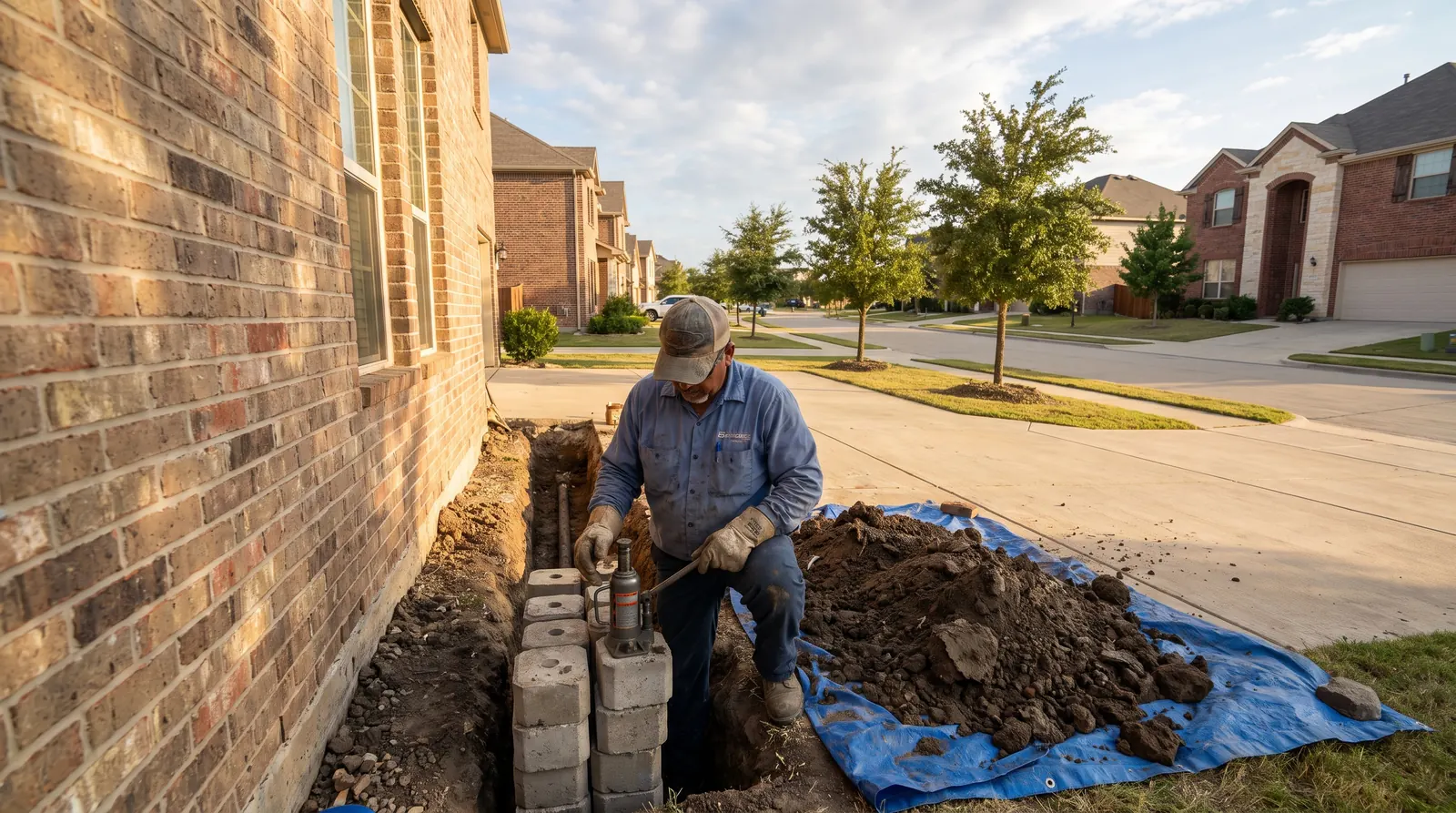
Foundation Drainage and Waterproofing
Keep Water and Clay From Working Against Your Slab
Seeing puddles against the foundation after storms or wide gaps in the soil every August? Call us and request a free estimate.
- Slab and pier and beam homes
- Written estimate before work
- Floor elevation survey on every visit
Get your free estimate
Tell us what's going on. We call you back fast.
Why Drainage Matters So Much on Rowlett Clay
Most slab foundations that move do so because the soil under them changes volume. Rowlett sits on Blackland Prairie clay, which can swell noticeably when it soaks up water and shrink just as much when it dries out. When one side of a house stays wet and another side bakes, the slab gets pushed and dropped unevenly.
That is why drainage work here is less about keeping a basement dry and more about keeping moisture even. Local homes are built on slabs, not basements, so the goal is simple: shed storm water away from the perimeter quickly, then keep the soil around the slab from swinging between soaked and cracked.
Our drainage and moisture control work in Rowlett often comes before, or alongside, any pier work. Lifting a slab without fixing the water pattern that moved it tends to invite the same problem back.
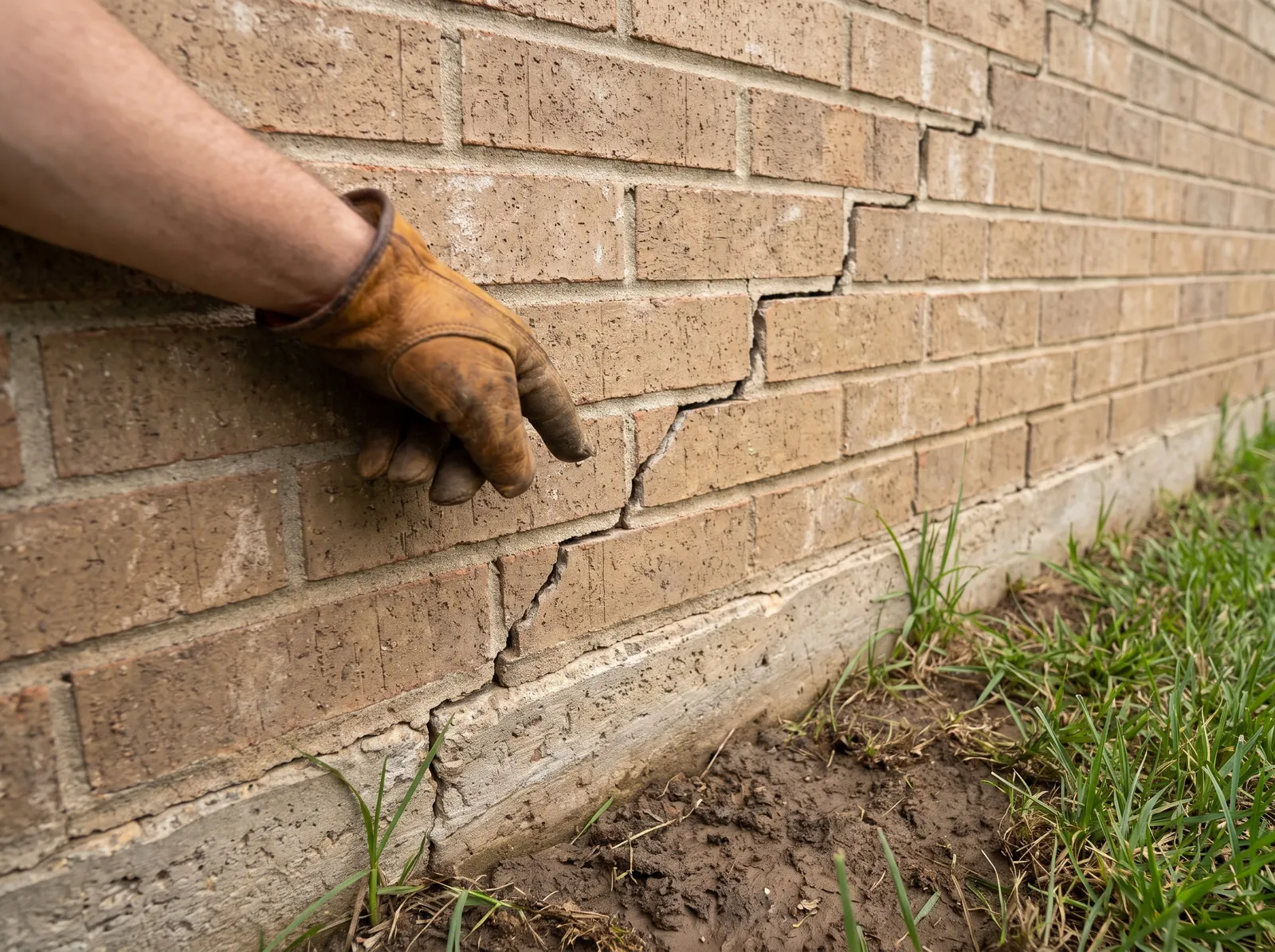
Drainage Fixes That Protect a Slab Home
Each property drains differently, especially on lots that slope toward Lake Ray Hubbard or sit lower than the neighbors. These are the measures we use most, usually in combination rather than one at a time.
Gutters and downspout extensions
A single downspout can dump hundreds of gallons against one corner of the slab during a spring storm. We make sure gutters are sized and pitched to carry that water, then extend downspouts or pipe them underground so the discharge lands well away from the foundation.
Regrading around the perimeter
Soil should fall away from the house on every side. Over time, settled backfill, flower beds and added mulch can flatten or even reverse that slope. Regrading with compacted soil restores a fall away from the slab so rain runs off instead of soaking in at the edge.
French drains and surface drains
Where water collects between houses, along a fence line or at the low corner of a lot, a gravel-filled trench with perforated pipe can intercept it. We route the pipe to daylight or a suitable outlet so the drain keeps working instead of backing up.
Even soil moisture during dry spells
In a long Texas drought, clay near the slab shrinks and opens deep cracks. A soaker hose set a short distance from the foundation, run on a steady schedule, helps the soil stay closer to the same moisture level all year. We show you placement and timing so you do not overwater.
Root barriers near mature trees
Large trees draw a lot of water from the soil, and their roots can dry out one side of a slab faster than the rest. A vertical root barrier installed between the tree and the house limits how far roots reach under the foundation without removing the tree.
Pricing
What Foundation Drainage Work Costs
| Repair type | Typical range | What moves the price |
|---|---|---|
| Downspout extensions and buried outlets | $150 – $1,000 | Number of downspouts, length of pipe, digging conditions |
| Perimeter regrading | $1,500 – $6,000 | Lot size, amount of fill soil, beds or flatwork in the way |
| French drain installation | $1,500 – $6,000 | Trench length, depth, outlet location, landscaping to restore |
| Root barrier installation | $1,000 – $5,000 | Barrier length and depth, root size, access near the tree |
| Engineer's drainage or foundation report | $400 – $1,000 | Scope of the evaluation, paid directly to the engineer |
These are national planning ranges, not quotes for your property. Slope, soil, access and existing landscaping all change the final number. You get a written estimate with the full scope before any digging starts.
How it works
How a Drainage Project Comes Together
- 1
Tell us what happens in heavy rain
Describe where water stands, where the soil cracks in summer and where you see interior cracks.
- 2
Walk the lot and the slab edge
We check gutters, downspouts, grade, beds, trees and neighboring runoff, and we note any signs of slab movement inside and out.
- 3
Lay out a drainage plan
We mark where water should go and which measures get it there, starting with the simplest fix that solves the problem.
- 4
Approve the written estimate
Scope, materials, outlet locations and price are in writing. Work begins only after you sign off.
- 5
Install and walk through upkeep
After the work is done, we show you how to keep downspouts clear and how to water the perimeter during dry months.
Why Choose Us for Foundation Drainage and Waterproofing?
Water pattern before piers
We look at where storm water goes and where the soil dries out first. Often that explains the cracks before anyone needs to talk about lifting the slab.
Built for slabs, not basements
You will not get a basement waterproofing pitch for a slab house. The work is matched to how local homes are actually built.
Practical upkeep advice
A watering routine and clear downspouts do a lot of the work once the drainage is right. We explain what to check each season so the fix keeps doing its job.
Clear scope in writing
You see where every trench, extension and barrier will go, what it costs and what landscaping will be disturbed before you approve anything.
Questions
Foundation Drainage and Waterproofing FAQ
Should I water my foundation in the summer?
On expansive clay, steady watering during long dry spells helps keep the soil from shrinking away from the slab. Use a soaker hose a short distance from the foundation rather than spraying the slab edge, and aim for even moisture, not puddles.
Do I need waterproofing if my house has no basement?
A slab home rarely needs membrane waterproofing. What it needs is good drainage so water moves away from the perimeter and the clay below stays at a more consistent moisture level.
Can drainage alone fix my foundation?
If the slab has only moved a little, correcting drainage can slow or stop further movement. If floors are already badly out of level, drainage is still needed, but piers or other repairs may be required too.
Will a root barrier hurt my tree?
A barrier cuts some roots on the house side, so it should be placed with the tree's size and health in mind. For a large or valuable tree, it can make sense to consult an arborist before installation.
Foundation Drainage and Waterproofing Across Texas
We handle foundation drainage and waterproofing in these communities:
Need Foundation Drainage and Waterproofing in Rowlett?
Water standing by the slab after every storm? Call (469) 890-1640, describe what you see, and request a free estimate.